Information, remembrance, and why meaning survives without breaking physics
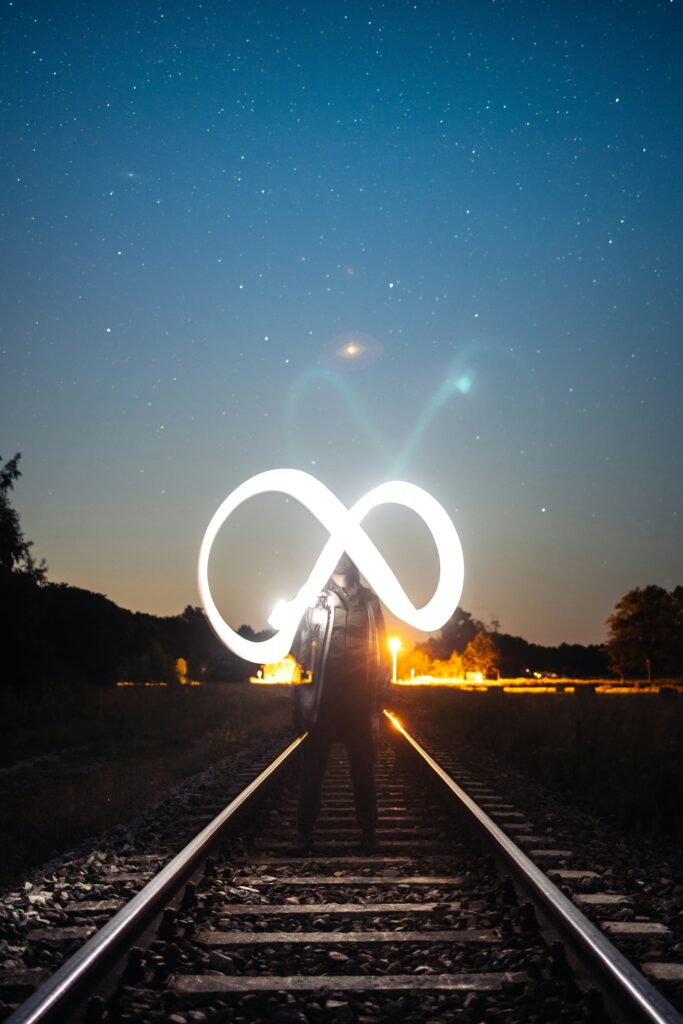
Photo by Marek Piwnicki on Unsplash
When a life ends, the question “Where did the energy go?” stops being a technical curiosity and becomes something else entirely.
When my father, Aaron Kok Chew Tang, passed away, I did not encounter a scientific mystery. I encountered a human one. The laws of physics were clear: the chemical and thermal energy of a human body disperses. Nothing is lost. Nothing is violated.
And yet something undeniable remained.
Memories persisted. Influence persisted. Patterns of speech, movement, judgment, and care continued to shape lives after his physical energy had long equilibrated with the environment.
This essay is not an attempt to revise physics.
It is an attempt to clarify what kind of question this actually is.
A Boundary Notice (Read First)
This article does not propose a new physical law.
It does not replace or modify Einstein’s mass–energy equivalence.
It does not claim that information is energy in a dimensional or measurable sense.
What follows is a representational framework — a way of thinking clearly about continuity, meaning, and structure across loss — using symbolic language drawn from both scientific and cultural traditions.
The equations below are mnemonic symbols, not physical identities.
Why E = mc² Became the Wrong Tool for the Question
Einstein’s equation did something extraordinary. It showed that mass is not substance but stored capacity — condensed energy. It taught us that what appears solid is simply energy arranged under constraint.
But when applied to death, the equation answers the wrong question.
Physics can tell us where the energy goes.
It cannot tell us where the person goes.
That is not a failure of physics.
It is a category error in the question.
Two Lenses, Not One Theory
To avoid that error, I separate two representational lenses that are often collapsed into one.
1. The Informational Lens (IToE)
The Information Theory of Everything (IToE) is not a claim about ontology. It is a way of noticing that structure, organization, and pattern — not substance — determine how systems behave.
In symbolic form, this lens is summarized as:
Effect ∼ Information × coordination limit²
Often written mnemonically as:
E ∼ I · c²
Here:
- E represents impact or effect, not physical energy
- I represents organized information or structure
- c² represents a limiting constant on coordination speed, inspired by — but not equivalent to — the speed of light
This symbolism highlights a simple idea:
Highly organized information, when allowed to coordinate efficiently, produces effects far larger than its raw material footprint would suggest.
This is why:
- small codebases can reshape industries
- brief cultural moments can redirect generations
- a single life can alter many others long after it ends
No joules are being counted here.
2. The Experiential Lens (QToE)
The Qualitative / Experiential Theory of Everything (QToE) — historically referred to as the Qi Theory of Everything in early exploratory work — is the complementary lens that addresses lived experience, drawing on Eastern traditions that describe life not as substance, but as flow, transformation, and continuity.
In this language:
- Jing represents potential or essence
- Shen represents articulated awareness
- Qi is the lived process connecting them
Symbolically:
Potential = transformation efficiency × awareness²
Written as:
J = Φ · S²
Again, this is not mathematics. It is a way of expressing something familiar in human experience:
Awareness compounds. Meaning multiplies. What is articulated reshapes what is possible.
A parent does not merely pass on traits.
They pass on patterns — and those patterns amplify in new contexts.
Why the Squared Terms Matter (Symbolically)
Both symbolic expressions include a squared term — c² and S². This is intentional.
They point to non-linear amplification:
- small differences in coordination or awareness can create disproportionate effects
- continuity is rarely additive; it is generational and compounding
When my father passed, what remained did not add to the world.
It reconfigured parts of it.
That is not energy conservation.
It is informational continuity.
Remembrance Is Not Energy Conservation
Physics already accounts for the dispersal of energy.
What it does not model — because it does not need to — is how structure persists:
- habits transmitted
- values enacted
- skills demonstrated
- rhythms learned
- stories retold
These are not forces.
They are patterns carried forward.
Remembering someone does not preserve their energy.
It preserves their organization within living systems.
A Brief Illustration: Humans, AI, and Articulation
This essay itself was developed with the assistance of artificial intelligence. That collaboration does not validate the framework scientifically, nor does it suggest machine consciousness.
It illustrates something simpler.
A vague internal sense (potential) was articulated into structured language (expression) through dialogue and iteration. No energy was created. No awareness emerged in the machine.
But structure was transferred.
This is not proof.
It is consistency.
What This Framework Does — and Does Not — Claim
This framework does:
- clarify why questions about meaning fail when framed as physics
- distinguish structure from substance
- offer language for continuity without violating science
- explain why influence outlasts physical presence
This framework does not:
- redefine energy
- assign units to information
- claim testable physical predictions
- propose a literal “theory of everything”
It is pre-diagnostic, not explanatory.
Later work — Phase–Scalar Reconstruction (PSR) and PSR-B — emerged precisely to enforce these boundaries more rigorously.
Why This Matters Now
We live in a time where:
- AI accelerates without understanding
- data accumulates without clarity
- systems scale faster than coordination
- loss happens faster than meaning can settle
In such conditions, confusion is not caused by ignorance.
It is caused by misapplied frameworks.
Sometimes the task is not to explain more —
but to ask the right kind of question.
Closing
My father’s energy returned to the universe, exactly as physics predicts.
What remained was not energy.
It was structure.
This essay is an attempt to speak about that continuity without pretending it belongs to physics — and without pretending it is unreal.
Not everything meaningful is measurable.
Not everything continuous is conserved.
Some things persist because they are carried forward, not because they are stored.
Author’s Note
This essay is part of the foundational, pre-PSR layer of the Tang Papers. It provides personal and conceptual grounding for later diagnostic work, but does not itself function as a technical method.
For formal research papers and diagnostic frameworks, see:
👉 www.robert-tang.com/research
— Lit Meng (Robert) Tang