
Why the Cybernetic Turn Created a Representational Challenge — and How Phase–Scalar Distinction Clarifies It
Context
This essay explores the intersection of:
- Embodiment vs Artificial Intelligence
- Cybernetics and Information Theory
- Posthumanism and meaning
- Phase–Scalar systems and coordination
It serves as an accessible entry point into the Tang Papers research program.
The body is not being erased. It is being misrepresented.
When cybernetics reframed the human system in terms of signals, feedback, and information flows, it did not simply introduce a new philosophy.
It introduced a representational shift.
Today, this shift appears in discussions of AI and posthumanism. Humans are increasingly described as patterns, signals, and transferable information rather than embodied presence. Thinkers such as N. Katherine Hayles, Norbert Wiener, and Claude Shannon helped establish this trajectory by separating information from its material substrate.
The instinct to recover embodiment is understandable.
But the issue is not simply “returning to the body.”
The issue is how the body is being represented.
The Debate Is Misframed
We are often asked to choose between:
- Human as body
- Human as information
Both positions overlook a deeper question:
Where is meaning actually selected and committed?
The Tang Papers approach this not as a question of substance, but of variable assignment and representation.
Phase vs. Scalar: A Foundational Distinction
Any coordinated system involves two fundamentally different types of variables. This distinction is formalized in the Phase–Scalar Reconstruction (PSR) framework.
Scalar variables
Track magnitude and accumulation:
- quantity
- rate
- duration
- scale
They answer: how much
They are:
- measurable
- transportable
- context-independent
Phase variables
Track structural coordination:
- synchronization
- relational position
- boundary alignment
- position within a cycle
They answer: where within the pattern
They are:
- contextual
- non-transferable
- structurally embedded
Every real system requires both.
The challenge is not the use of scalar models.
It is the misassignment of phase roles into scalar descriptions.
The Representational Challenge Introduced by Cybernetics
Cybernetics enabled powerful scalar descriptions of communication and control.
But in doing so, it often reassigned the role of the body:
From:
a relational anchor of orientation, timing, and coordination
To:
a source of signals within a transportable system
This shift introduced a persistent blind spot.
A system’s phase anchor cannot be:
- averaged
- transported
- reduced to probability distributions
without losing the function it performs.
This is best understood as a representational mismatch, not a rejection of cybernetics itself.
Why the Body Still Matters

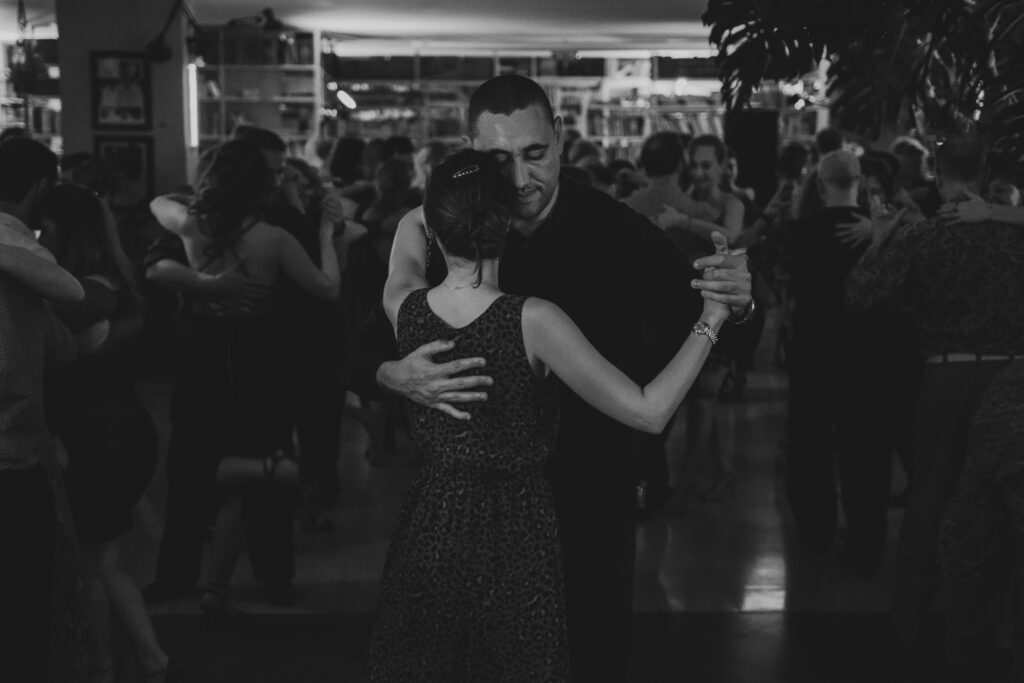

The body matters not primarily because it is physical “flesh,” but because it enforces structural conditions required for meaning to become non-interchangeable.
Constraint
You cannot be everywhere.
Localization enables coordination.
Friction
Effort and resistance provide calibration.
They are not noise — they are signal.
Irreversibility
Time moves forward.
Actions carry consequence and cannot be undone.
These conditions create stake.
They allow meaning to be committed, not merely generated.
What AI Reveals
Modern AI systems excel at:
- pattern generation
- probabilistic continuation
- signal recombination
They can simulate constraint, friction, and sequence.
But they do not operate from within them.
So while AI can generate outputs that resemble meaning:
it cannot be the point at which meaning is committed
AI provides the signal.
The human system provides the signature.
Model Collapse and the Missing Phase Layer
A growing concern in AI research is model collapse (recursive degradation), where systems trained on outputs of other systems gradually lose coherence.
This is not simply data loss.
It reflects the absence of a grounding layer:
the phase layer
Without:
- constraint
- friction
- real-time coordination
systems can continue producing outputs while drifting from alignment.
Within the Tang Papers, this pattern is described as:
Phase Drift — when surface correctness persists while relational coordination degrades.
What Dance Reveals
For over twenty-five years, Beverley and I have taught ballroom and Latin dance.
At its highest level, dance is not steps or technique.
It is:
phase coordination between two systems in time
A student can count perfectly (scalar accuracy) and still be completely out of sync.
The numbers are correct.
The movement continues.
But the coordination has drifted.
This is Phase Drift in practice.
The lead does not transmit information.
The lead initiates a phase event.
The follow completes it.
The dance exists:
not in either body,
but in the coordination between them
Recovering the Zero Point
The body functions as a phase anchor in lived coordination.
It does not “contain” meaning.
It enables the conditions under which meaning becomes:
- situated
- committed
- irreversible
This grounding operates across both:
- Experiential layer (QToE): rhythm, anticipation, felt time
- Structural layer (IToE): phase alignment, boundary completion
The Reframe
We are not being evicted from the flesh.
We are drifting from its anchoring role.
And drift is not permanent.
It is:
loss of orientation
Closing
Drift can be reversed.
But not through more data.
Not through better models.
Only through re-entry into:
- constraint
- timing
- position
Because:
Orientation cannot be computed.
It has to be entered.
The body is not where meaning lives.
It is where meaning becomes irreversible.
Entry Points into the Tang Papers
For readers interested in the structural framework:
- Phase–Scalar Reconstruction (PSR)
- The Loom: A Phase–Scalar–Boundary Model of Pattern Formation
- Phase Drift: A Cross-Domain Failure Mode
- Rhythm–Information Time Principle (RITP)
Full research archive:
dancescape.com/research
Final Question
If your systems continue to produce correct outputs,
but lose coordination with reality—
how would you know?